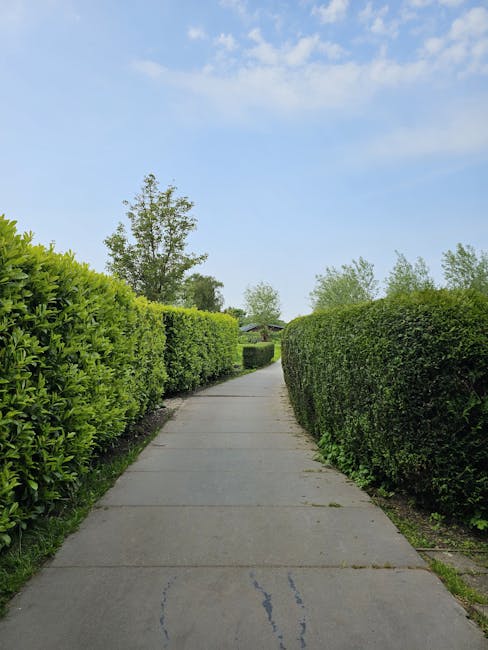
Raphael Park hedge trimming rules and council permit advice

If you live near Raphael Park and your hedge is starting to feel a bit wild at the edges, you are not alone. One week it looks neat enough, and the next it is leaning over the path, catching the eye, and maybe even catching a complaint. That is where Raphael Park hedge trimming rules and council permit advice becomes genuinely useful: it helps you trim with confidence, avoid awkward mistakes, and know when a permit, consent, or extra check might be needed.
This guide gives you a practical, grounded overview of what usually matters around hedge trimming in and around a public park setting, how council expectations are often handled, and what to do before anyone lifts a pair of shears. It is written for real homeowners, landlords, and gardeners who just want to do the job properly without overcomplicating it. And to be fair, that is usually the best way.
For readers looking for broader upkeep support, our garden maintenance and hedge trimming in Gidea Park pages may also be helpful when you need ongoing care rather than a one-off tidy-up.
- Understand when hedge trimming is straightforward and when it becomes a permissions issue.
- Learn how to check boundary ownership, nesting season concerns, and nearby footpath safety.
- See what a sensible permit or consent check usually involves in a UK council context.
- Use a checklist that helps you avoid fines, disputes, and unnecessary damage.
Why Raphael Park hedge trimming rules and council permit advice matters
Hedge work sounds simple until a clipped branch ends up over a boundary, a footway is obstructed, or someone realises the hedge belongs to a shared frontage rather than a private garden. In park-adjacent parts of London, that sort of small misunderstanding can snowball quickly. A tidy hedge can improve visibility, support safety, and make a property look cared for. A badly timed trim, though, can create complaints, disturb nesting birds, or affect protected trees and frontage boundaries.
The reason this topic matters is not just about avoiding trouble. It is about doing low-drama, good-quality gardening. If you are maintaining a hedge near Raphael Park, you are likely balancing three things at once: the condition of the plant, the rights of neighbouring landowners or the council, and the practical safety of anyone walking past. That balance is easy to get wrong if you treat all hedge trimming the same.
There is also a wider planning angle. Some hedges sit near conservation-related settings, public access routes, or landscape features that deserve a bit more care than a quick weekend haircut. The question is not simply "Can I cut it?" but "Should I check anything first?" That is the difference between routine maintenance and a job that needs extra caution.
When in doubt, a measured approach is usually best. A little patience now can save a lot of hassle later. Honestly, it is one of those jobs that rewards a slow first ten minutes.
How Raphael Park hedge trimming rules and council permit advice works
Most hedge trimming jobs fall into one of three categories: private garden maintenance, boundary-related work, or work that affects a public-facing edge. The first is usually simplest. The second needs a bit more checking. The third is where permit advice becomes relevant, especially if access, pavement space, or council-owned land may be involved.
In practice, the process often looks like this:
- Identify who owns the hedge. Is it on your land, shared, or bordering council-managed space?
- Check whether the hedge affects a public route. If it leans over a pavement, path, or park edge, extra care may be needed.
- Look for any tree connections. If the hedge grows within or near a protected tree root area, the work may need specialist review.
- Think about timing. Breeding birds, heavy growth periods, and weather all affect the safest trim window.
- Confirm whether a permit or consent is needed. This depends on location, ownership, and the type of land involved.
The permit question is where people get stuck. Truth be told, many hedge jobs do not need a formal permit if they are routine maintenance on private land. But if the work involves traffic management, access onto council land, temporary obstruction, or protected vegetation, that may change. The sensible move is to verify before starting rather than assuming the answer.
For larger or more complex work, a contractor with strong process discipline can help. Our health and safety policy and insurance and safety information are useful references if you want the job handled with proper caution and professional standards.
Key benefits and practical advantages
There is a very ordinary kind of benefit to getting hedge rules right: fewer headaches. But there are also some more tangible gains that often get overlooked.
- Cleaner boundaries: A hedge trimmed correctly stays within its space and does not create a neighbourly muddle.
- Safer access: Paths, driveways, and nearby park edges remain clear and easier to use.
- Better plant health: Thoughtful trimming supports shape, density, and long-term growth.
- Reduced risk of complaints: If your hedge is not overhanging or blocking sightlines, you are less likely to hear about it from anyone.
- More predictable planning: Once you know what checks are needed, you can schedule work with far less stress.
There is also the simple visual reward. A properly cut hedge frames a garden in a way a shaggy one never quite can. On a bright morning, with the clippings gathered and the walkway cleared, the difference is immediate. You can actually hear the garden feel quieter, if that makes sense. Less clutter. More shape.
If you are working on broader outdoor improvement, a hedge trim often pairs nicely with softer planting or structure changes. For ideas beyond hedges themselves, see privacy hedge ideas and low-maintenance outdoor improvements.
Who this is for and when it makes sense
This guidance is relevant if you are any of the following:
- a homeowner with a hedge near a public-facing boundary
- a landlord wanting to keep a property presentable and compliant
- a tenant responsible for external upkeep under an agreement
- a gardener or groundskeeper working for a private client near Raphael Park
- someone planning seasonal maintenance and not sure whether consent is needed
It also makes sense if you are facing a one-off situation, such as a hedge suddenly shooting up after wet weather, or if a neighbour has asked you to reduce an overhang. Those are common moments when people realise there may be a right way and a rushed way. The rushed way is often regretted later.
If your boundary has fencing, climbing plants, or nearby hard landscaping, the conversation gets a little more interesting. A hedge can interact with all three. In that case, related pages like fencing, landscaping, and tree surgery may be useful if your project extends beyond a simple trim.
Step-by-step guidance
Here is the practical route we would recommend. Not glamorous, perhaps, but it works.
- Walk the boundary slowly. Look for overhang, dead wood, poor visibility, or branches reaching into shared space.
- Confirm ownership. If the hedge sits on or near a boundary line, do not assume it is entirely yours.
- Check the calendar. Avoid cutting during obvious nesting activity where possible, and be cautious during very hot, frosty, or stormy conditions.
- Assess access needs. Will you need to place a ladder on a pavement, close part of a path, or move waste through a shared area?
- Decide whether permission is needed. If the work touches council land, public access, or protected features, contact the relevant authority before proceeding.
- Prepare the trim shape. Mark the target line so the hedge does not end up lopsided after the first enthusiastic cut.
- Cut in stages. Take off a little, step back, check, repeat. It saves the classic "oh no, that side is shorter" moment.
- Clear waste responsibly. Bag clippings, sweep paths, and make sure nothing blocks drainage or access.
- Review the result. Check for safety, symmetry, and any missed snagging growth.
If you are dealing with a bigger garden reset rather than routine maintenance, it can help to combine the hedge plan with wider tidy-up work. Our garden restoration tips and hedge trimming techniques articles are a good companion read.
Expert tips for better results
Experienced hedge work is mostly about restraint and timing. You do not need to shave everything down to the wood just because the hedge looked a bit unruly last week. In fact, overcutting is one of the fastest ways to create patchy regrowth.
- Trim to the hedge type, not the mood of the day. Evergreen hedges, flowering hedges, and mixed borders all respond differently.
- Use clean, sharp tools. Blunt blades tear rather than cut. You can hear the difference, a rough rasp instead of a crisp snip.
- Keep the top slightly narrower than the base. That helps light reach the lower growth.
- Do not ignore the weather. Wet hedge material is heavier; windy days make precise cuts harder.
- Take photo notes before you begin. This sounds fussy, but it helps if you are trying to maintain a formal line over time.
One small but practical tip: if you are trimming beside a path or public edge, work from the side that gives you the safest stance. Plenty of accidents happen because someone tries to reach just a little too far. That little bit matters.
For tool selection and general prep, our article on essential gardening tools is a handy companion, especially if you want to keep the kit simple and effective.
Common mistakes to avoid
A lot of hedge trimming trouble comes from very human shortcuts. Nothing dramatic. Just little assumptions that build into bigger issues.
- Assuming the hedge is private property. Boundary lines are not always obvious.
- Cutting without checking timing. Nesting birds and seasonal growth can complicate matters.
- Ignoring overhang onto public land. That can create safety and access problems fast.
- Using the wrong equipment. A hedge cutter is not always better than hand tools, especially on smaller, delicate work.
- Removing too much at once. Regressive hard cuts can leave ugly gaps or stress the plant.
- Forgetting waste clearance. Clippings on paths are a slip hazard. Not ideal, to put it mildly.
There is one more mistake worth mentioning: treating permit advice as a nuisance rather than a safeguard. It is rarely there to make life harder for ordinary gardeners. More often it exists to protect public land, shared boundaries, traffic flow, or wildlife. That is fair enough.
Tools, resources and recommendations
For a tidy, controlled hedge trim, the right kit matters. You do not need a van full of gear, but you do need the basics in good condition.
| Tool or resource | Best for | Why it helps |
|---|---|---|
| Hand shears | Light shaping and detailed work | Good control around corners and uneven growth |
| Hedge trimmer | Longer runs and routine maintenance | Speeds up larger jobs if used carefully |
| Gloves and eye protection | General hedge work | Protects against debris and surprise twigs |
| Tarpaulin or bags | Collection and disposal | Keeps paths clear and cleanup efficient |
| Boundary photos and notes | Permit or ownership checks | Useful if you need to explain where the work is happening |
For additional garden context, you may also find these helpful: protecting gardens from strong winds, winter plant care ideas, and ground cover ideas for busy borders.
If your hedge work is part of a larger refresh, the following services can support the rest of the space too: lawn care, lawn mowing, and patio cleaning.
Law, compliance, standards and best practice
This is the section where a careful, plain-English approach really matters. For hedge trimming around Raphael Park or any similar London location, the exact legal position can vary depending on land ownership, boundary status, protected trees, local bylaws, and whether public access is affected. So it is wise to treat online general advice as a starting point, not the final word.
In UK practice, the main compliance themes usually include:
- Ownership and consent: Do not cut into land you do not control without permission.
- Public safety: Keep paths, sightlines, and access routes clear.
- Wildlife awareness: Be cautious around bird nesting periods and habitat disturbance.
- Tree protection: Hedge work near trees can raise separate tree-related obligations.
- Waste handling: Remove arisings responsibly and avoid blocking drains or walkways.
Best practice usually means checking before cutting if any of the following are true: the hedge borders council land, touches park-facing ground, obscures signage or lighting, sits near a mature tree, or may need access equipment over a public area. If you are still unsure, ask first. That is the safest habit by a mile.
For customers who want a professional, compliance-aware service approach, our pages on terms and conditions, complaints procedure, and payment and security help explain how we work in a transparent, straightforward way.
Options, methods and comparison
Not every hedge near a park needs the same approach. The best method depends on size, accessibility, desired finish, and whether permissions are likely to come into play.
| Method | Best used when | Pros | Watch-outs |
|---|---|---|---|
| Hand pruning | Small hedges or detailed shaping | Precise, gentle, quiet | Slower on larger runs |
| Powered hedge trimming | Routine maintenance on accessible hedges | Fast and efficient | Can overcut if rushed |
| Professional site visit | Boundaries, access issues, or council-adjacent work | Reduced risk, better judgement | May involve higher upfront cost |
| Staged seasonal plan | Hedges that grow heavily or border public space | More predictable and plant-friendly | Requires regular follow-up |
If you are comparing ways to improve the whole outdoor space, it may help to read about calmer garden layouts and seating concepts that work well once the hedge line is under control.
Case study or real-world example
Here is a simple real-world style scenario. A homeowner living close to Raphael Park notices that a front hedge has grown broad enough to narrow the pavement edge and brush past passers-by. The hedge is healthy, but it is now creating a mild visibility and access issue. Rather than cutting immediately, they first check whether the hedge sits fully on private land and whether any part touches council-managed frontage or needs footpath access for tools and waste removal.
They also choose to avoid trimming during an obviously busy nesting window. Instead, they plan a modest reduction, taking back only the outer growth and keeping the base healthy. No drastic reshaping. No heroic ladder balancing, thank goodness. The result is a cleaner line, a safer route for pedestrians, and a hedge that still looks full rather than hacked at.
That kind of measured approach is usually the sweet spot. Not perfect, maybe. But sensible, respectful, and far less likely to create a follow-up problem.
We see similar situations when customers combine hedge work with wider garden recovery. If that sounds like your space, our about us page explains the kind of careful, practical approach we bring to maintenance-led projects.
Practical checklist
Use this before you start trimming. It keeps things tidy in your head as much as in the garden.
- Confirm the hedge is on land you are allowed to cut.
- Check whether the hedge borders council land, a park edge, or a public path.
- Look for bird nesting activity or other wildlife concerns.
- Review the weather and pick a safe working day.
- Decide whether a permit, consent, or permission check is needed.
- Inspect tools, gloves, and eye protection before starting.
- Set the shape line before making major cuts.
- Work gradually and step back often to check balance.
- Keep public access clear while you work.
- Collect and dispose of waste properly.
- Take a final look for missed branches, sharp points, or debris.
It sounds basic, I know. But the basics are what keep a hedge trim from turning into a mess.
Get a free quote today and see how much you can save.
Conclusion
Raphael Park hedge trimming rules and council permit advice are really about one thing: trimming with care, not guesswork. If you understand ownership, public access, seasonal timing, and the difference between routine maintenance and permission-sensitive work, you are already ahead of most common problems. And once you have that framework, hedge work becomes much calmer.
The best results are usually the boring-looking ones: neat lines, safe paths, healthy regrowth, and no unpleasant surprises from neighbours or the council. Not glamorous, but very satisfying. The garden feels easier to live with, and that matters more than people admit.
If you need hands-on support, broader maintenance planning, or a professional eye on a hedge that sits near a sensitive boundary, it is worth speaking to a local gardening team before you start. A five-minute check can save a five-hour headache.
Sometimes the nicest part of a well-kept hedge is simply the peace it brings when you step outside in the morning.
Frequently Asked Questions
Do I need a permit to trim a hedge near Raphael Park?
Not always. Routine hedge trimming on private land usually does not need a permit, but if the hedge affects council land, a public path, access equipment, or protected vegetation, extra permission checks may be sensible.
Can I cut back a hedge that overhangs the pavement?
Often yes, but you should only cut the part that is genuinely your responsibility and avoid causing obstruction or unsafe debris. If the hedge is tied to public access or council frontage, check first.
What is the safest time of year to trim a hedge?
The best timing depends on the hedge type and local conditions. As a general rule, avoid obvious nesting periods and do not trim in extreme weather. A measured seasonal approach usually works best.
What if the hedge belongs to the council or borders council land?
In that case, do not assume you can trim it freely. Check ownership and ask for advice before any work that touches council-managed space or a park edge.
Are there special rules for hedges near trees?
Yes, potentially. If the hedge is close to mature trees, roots, or tree protection areas, separate tree-related considerations may apply. This is where tree surgery advice can be useful.
How much can I cut off without damaging the hedge?
That depends on the species, age, and health of the hedge. As a rule, gradual reduction is safer than heavy cutting. If in doubt, take less off and review the shape before cutting more.
What should I do if my neighbour complains about the hedge?
Stay calm and check the boundary line first. Many disputes come from assumptions rather than facts. A polite conversation and a clear plan usually solve more than people expect.
Can I trim my hedge during bird nesting season?
You should be cautious. If active nests are present, avoid disturbing them. Wildlife protection is a real consideration, so it is worth checking carefully before starting any major trim.
Do I need a professional for hedge trimming near Raphael Park?
Not for every job, but it is often a good idea if the hedge is tall, close to public access, or linked to boundary or permit questions. A professional can reduce risk and make the process much smoother.
What if I need access over a path to trim the hedge?
That can change the situation. If you need ladders, cones, temporary access control, or any work that affects public movement, check whether permission or a permit is required before proceeding.
What should a good hedge trimming service include?
A good service should include safe working practice, clear waste removal, respect for boundaries, tidy finishing, and honest advice if permissions or additional checks are needed. Transparency counts for a lot.
How do I know if my hedge trim is more than just routine maintenance?
If the job involves council land, public pathways, access restrictions, protected trees, or neighbour boundary uncertainty, it is likely beyond a simple routine trim and deserves a closer look before you begin.
Where can I get help with hedge trimming in the local area?
You can explore our gardening services or get in touch through our contact page if you want tailored guidance for your hedge, boundary, or permit question.